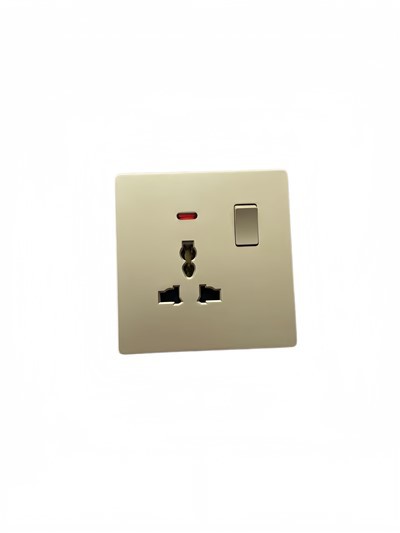
As a fundamental component in modern building electrical systems, plastic wall switches' performance directly impacts electrical safety and user experience. Driven by advances in materials science and process technology, plastic switches have evolved from single-function components to comprehensive products that balance safety, durability, and aesthetics.
Insulation and safety are core performance characteristics of plastic switches. High-quality switches typically utilize flame-retardant engineering plastics such as PC (polycarbonate) and ABS (acrylonitrile butadiene styrene copolymer), boasting insulation resistance exceeding 10⁹Ω, effectively preventing the risk of current leakage. Some high-end products are UL94 V-0 certified for flame retardancy, self-extinguishing upon contact with open flames to prevent the spread of fire. Furthermore, appropriate creepage distance design (typically ≥3mm) further reduces the probability of short circuits.
Mechanical durability determines the lifespan of a switch. Testing indicates that mainstream plastic switches can achieve a lifespan of over 100,000 keystrokes, thanks to the nickel or silver plating of the internal metal contacts and the fatigue-resistant plastic base. For example, panels made of thickened PC material can withstand compression loads exceeding 5N without deformation, while the integrated snap-fit structure enhances assembly stability.
Environmental adaptability is also crucial. High-quality plastic switches maintain rigidity within a temperature range of -20°C to 60°C and do not expand due to water absorption at 85% humidity. Some products incorporate UV inhibitors to ensure they retain discoloration and embrittlement under long-term sunlight.
With the development of smart homes, new plastic switches integrate conductive polymer contacts with modular circuit designs, maintaining basic performance while supporting expanded functions such as touch control and Wi-Fi control. In the future, the application of nano-modified plastics will further enhance the wear resistance and antibacterial properties of switches, further solidifying their irreplaceable position in the electrical interface field.