


When it comes to electrical systems, one of the most common yet crucial components in our daily lives is the metal wall socket. As a trusted metal wall socket supplier, I often receive inquiries about the maximum current that these sockets can handle. This is a vital question, as understanding the current - handling capacity is essential for ensuring safety, preventing electrical hazards, and optimizing the performance of electrical appliances.
Understanding Electrical Current and Its Significance
Before delving into the maximum current capacity of metal wall sockets, it's important to understand what electrical current is. Electrical current is the flow of electric charge through a conductor, measured in amperes (A). In a household or commercial electrical system, different appliances draw different amounts of current based on their power requirements. For example, a small LED lamp may draw only a fraction of an ampere, while a high - power appliance like an electric heater or an air conditioner can draw several amperes.
Exceeding the maximum current capacity of a wall socket can lead to overheating, which may cause damage to the socket, the connected appliances, and even pose a fire risk. Therefore, knowing the maximum current a socket can handle is a fundamental aspect of electrical safety.
Factors Affecting the Maximum Current Capacity of Metal Wall Sockets
Several factors influence the maximum current that a metal wall socket can handle:
Material of the Socket
The material of the socket plays a significant role. Metal wall sockets are typically made of materials such as stainless steel or steel. These metals have good electrical conductivity and heat - dissipation properties. Stainless steel, for instance, is corrosion - resistant and can withstand high temperatures without significant deformation. Our Stainless Steel Usb Double Socket is designed with high - quality stainless steel, which allows it to handle a relatively high current while maintaining its structural integrity.

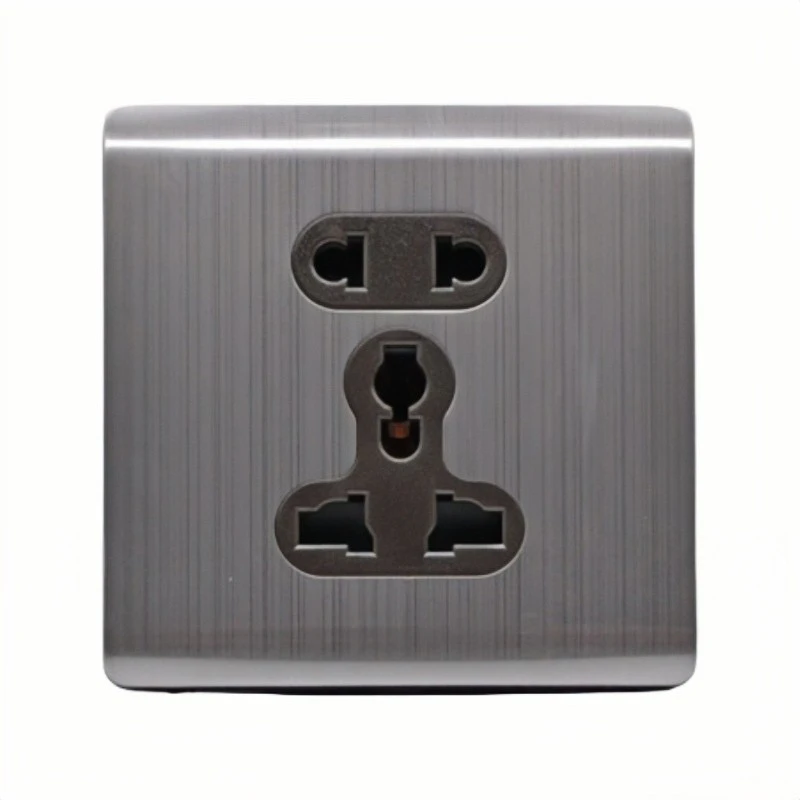
Steel electric sockets also have their advantages. They are strong and can provide a stable connection for electrical appliances. The Steel Electric Sockets we offer are engineered to ensure efficient current flow and can handle a considerable amount of current depending on their design and specifications.
Design and Construction
The design of the socket, including the size and thickness of the conductive parts, affects its current - handling capacity. Sockets with larger and thicker conductors can carry more current because they offer less resistance to the flow of electricity. A well - designed socket also has proper insulation to prevent short - circuits and ensure that the current flows only through the intended paths. Our sockets are carefully engineered with optimal conductor sizes and high - quality insulation materials to maximize their current - handling capabilities.
Cooling and Ventilation
Heat is generated when current flows through a conductor. Adequate cooling and ventilation are necessary to dissipate this heat and prevent the socket from overheating. Some metal wall sockets are designed with ventilation holes or channels to allow air to circulate and carry away the heat. This helps in maintaining a safe operating temperature and enables the socket to handle higher currents.
Common Current Ratings of Metal Wall Sockets
In general, metal wall sockets come with different current ratings, which are usually marked on the socket itself. The most common current ratings for household wall sockets are 10A, 13A, and 16A.
- 10A Sockets: These are commonly used for low - power appliances such as lamps, chargers, and small electronics. They are suitable for applications where the total power consumption of the connected appliances is relatively low.
- 13A Sockets: This is a very common rating in many countries, especially in the UK. 13A sockets can handle a wide range of household appliances, including medium - power devices like hair dryers, televisions, and small kitchen appliances.
- 16A Sockets: These sockets are typically used for high - power appliances such as electric heaters, air conditioners, and large power tools. They are designed to carry a larger amount of current safely.
Determining the Right Socket for Your Application
As a metal wall socket supplier, I always recommend choosing the right socket based on the power requirements of your appliances. To determine the appropriate socket, you need to calculate the total current draw of the appliances that will be connected to the socket.
The power (P) of an electrical appliance is related to the current (I) and voltage (V) by the formula (P = VI). In most household electrical systems, the voltage is a standard value (e.g., 110V in the US and 220 - 240V in many other countries). By rearranging the formula, we can calculate the current draw of an appliance: (I=\frac{P}{V}).
For example, if you have an appliance with a power rating of 1000W and the voltage is 220V, the current draw is (I=\frac{1000}{220}\approx4.55A). In this case, a 10A socket would be sufficient. However, if you plan to connect multiple appliances to the same socket, you need to add up their current draws and choose a socket with a higher current rating to ensure safety.
Safety Considerations
Safety should always be the top priority when dealing with electrical systems. Here are some safety tips regarding the current - handling capacity of metal wall sockets:
- Do not overload sockets: Never connect more appliances to a socket than its rated current capacity. Overloading can cause overheating, which may lead to a fire.
- Check for signs of damage: Regularly inspect your wall sockets for signs of damage, such as burns, discoloration, or loose connections. If you notice any damage, replace the socket immediately.
- Use appropriate fuses and circuit breakers: Fuses and circuit breakers are designed to protect the electrical system from over - current. Make sure they are properly rated for the socket and the connected appliances.
Conclusion
In conclusion, the maximum current that a metal wall socket can handle depends on various factors, including the material, design, and construction of the socket. As a metal wall socket supplier, we offer a wide range of sockets with different current ratings to meet the diverse needs of our customers. Whether you need a socket for low - power electronics or high - power appliances, we have the right solution for you.
If you are interested in our metal wall sockets or have any questions about their current - handling capacity, please feel free to contact us for a detailed discussion. We are committed to providing high - quality products and excellent customer service. Let's work together to ensure the safety and efficiency of your electrical systems.
References
- Electrical Installation Regulations, various national and international standards bodies
- Textbooks on electrical engineering, covering basic electrical principles and safety regulations


