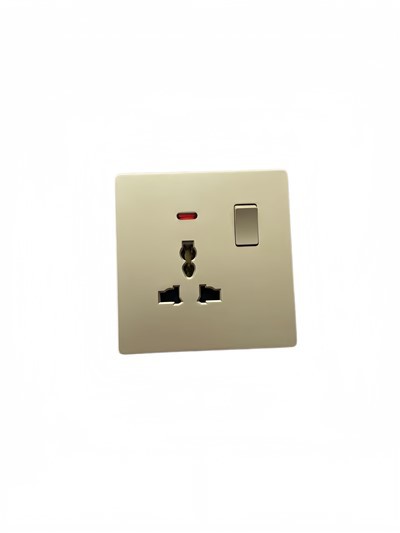
As an indispensable component of modern building electrical systems, plastic wall switches offer convenient circuit control while ensuring safety and durability. Despite their simple appearance, their functional design has been carefully optimized to meet the diverse needs of both home and commercial environments.
In terms of basic functionality, plastic wall switches primarily connect or disconnect circuits, thereby controlling the power supply to lamps, outlets, or other electrical devices. By manually operating the button or lever on the switch panel, users can easily turn the device on and off. This process relies on the metal contacts within the switch. When the switch is flipped, the contacts close or separate, completing or disconnecting the circuit.
In terms of safety, the use of plastic is a key design feature. Compared to metal casings, plastic has excellent insulation properties, effectively reducing the risk of electric shock, especially in humid environments. This property is particularly important. Furthermore, modern plastic wall switches often comply with national electrical safety standards, with features such as anti-accidental touch protection and overload protection further enhancing reliability.
Functional expansion is also a key feature of plastic wall switches. In addition to basic on/off control, some products integrate dimming, dual-control, or multi-control functions to meet the needs of various scenarios. For example, a dual-control switch allows users to control the same light from two different locations, making it ideal for areas like stairways or hallways. Smart plastic wall switches further integrate IoT technology, supporting remote control or voice operation for an enhanced user experience.
In summary, while seemingly simple, plastic wall switches offer fundamental functions encompassing circuit control, safety protection, and expanded functionality, making them a practical and reliable foundational component in modern electrical systems.