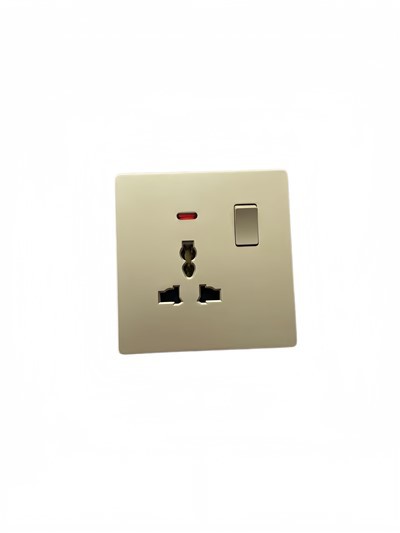
As a crucial component of electrical control devices, metal light switches are widely used in home, commercial, and industrial lighting systems. Their metal construction, combined with sophisticated circuit design, offers durability, safety, and aesthetics, making them a key component of modern lighting control.
Metal light switches are typically constructed from highly conductive and corrosion-resistant materials such as copper, stainless steel, or aluminum alloy. These materials not only effectively conduct electricity but also resist oxidation and wear over time, ensuring the switch's longevity. The metal housing also provides enhanced mechanical strength, allowing it to withstand the physical stresses of frequent operation, making it suitable for high-frequency use.
In terms of functionality, metal light switches are primarily categorized as single-pole, dual-pole, and multi-pole types, meeting the lighting needs of various scenarios. Single-pole switches are suitable for controlling a single-position light fixture, while dual-pole switches allow users to turn the same light on and off from two different locations, often found in hallways or stairwells. Furthermore, some high-end metal light switches incorporate dimming, timing, or smart home compatibility features, enhancing the user experience through touch or sensor technology.
Safety is one of the core advantages of metal light switches. Metal offers excellent heat dissipation, effectively reducing the risk of circuit overloads. Furthermore, high-quality products often feature an insulating layer and anti-touch features, complying with international electrical safety standards (such as IEC or GB) to further ensure user safety.
Aesthetically, the simple lines of metal light switches complement modern decor styles, and surface finishes such as chrome plating, matte black, or brushed gold can be adapted to suit various interior design requirements.
In summary, metal light switches, with their durability, functionality, and safety, have become a reliable choice for lighting control. With the integration of smart technologies, their application scenarios will further expand.