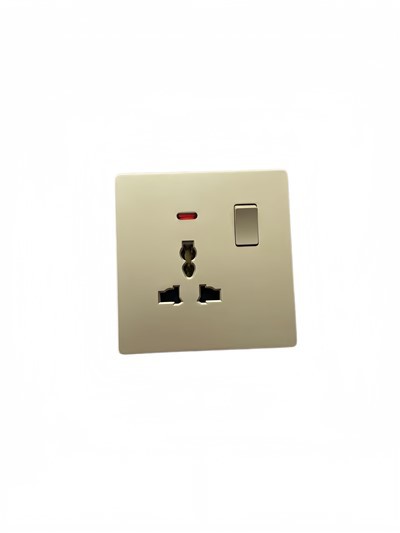
As a crucial component of electrical installation, metal wall sockets have a direct impact on their safety and durability. This article will detail the main components of metal wall sockets and their assembly methods.
I. Main Components
Metal wall sockets typically consist of the following core components:
1. Metal Housing: Made of galvanized steel or stainless steel, it provides mechanical protection and electromagnetic shielding, and the surface must be treated to prevent rust.
2. Insulating Base: Made of flame-retardant engineering plastic (such as PC or nylon), it secures conductive components and isolates live conductors, ensuring electrical safety.
3. Conductive Copper Parts: These include the live (L), neutral (N), and ground (E) sockets, stamped from phosphor bronze or brass and nickel-plated for enhanced conductivity and corrosion resistance.
4. Screws and Fasteners: Secure the housing and base, typically made of stainless steel to prevent rust.
5. Ground Terminal: An independent grounding design ensures rapid current conduction in the event of a leakage, complying with safety regulations.
II. Assembly Steps
1.Pre-installing Conductive Components: Insert the live, neutral, and ground wire sockets into the slots on the insulating base at standard spacing, ensuring the contact strips are spring-loaded and secure with screws.
2. Installing Terminal Blocks: Strip the wires and insert them into the corresponding terminal holes. Tighten the crimping screws. The ground wire must be connected separately to the grounding electrode.
3. Assembling the Housing and Base: Align the pre-assembled base with the metal housing's snap-on positions. Gently press to secure the two together. Finally, secure the edge seam with screws.
4. Functional Test: After assembly, use a multimeter to test the insulation resistance between the sockets (should be >10MΩ) and simulate plugging and unplugging to verify structural stability.
III. Precautions
Strictly adhere to electrical safety standards during assembly to avoid deformation of copper components or loosening of screws. The metal housing must be reliably grounded to prevent the risk of electric shock. It is recommended that this operation be performed by a professional electrician to ensure compliance with national mandatory certification requirements (such as CCC).
Through scientific and reasonable composition methods, metal wall sockets can achieve efficient conductivity and long-term stable operation, meeting the electrical needs of modern buildings.