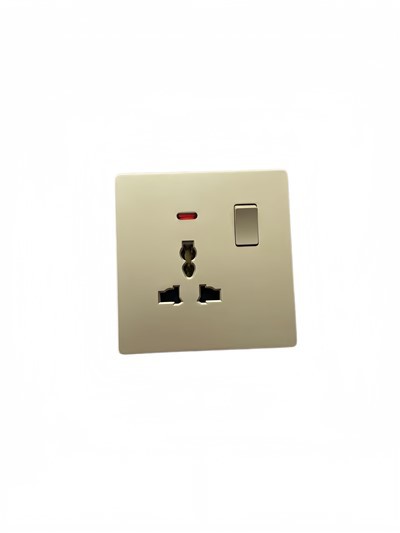
Plastic wall sockets are essential power distribution devices in modern homes and offices. Their core function is to provide a safe and stable AC power connection for electrical appliances. Despite their simple appearance, their internal structure and operating principles involve fundamental electrical principles and safety design.
Structurally, plastic wall sockets primarily consist of an insulating outer shell, metal conductive components, and a fixing mechanism. The outer shell is typically made of flame-retardant plastic (such as PC or ABS) to prevent fires caused by short circuits or overheating. Inside, there are two or three metal sockets, corresponding to the live wire (L), neutral wire (N), and ground wire (E, available on some sockets). The live and neutral wires connect to the household electrical system via terminals on the back of the socket, while the ground wire provides additional safety, preventing electrical current from directly conducting to the human body in the event of a leakage from an appliance.
When an appliance plug is inserted into the socket, the metal contacts of the plug firmly contact the corresponding metal contacts of the socket, completing the circuit. AC power then flows from the household distribution box through the wires into the socket, and is then transmitted through the plug to the appliance, powering it. my country's standard household voltage is 220V, with a frequency of 50Hz. Sockets are designed to strictly adhere to these specifications to ensure the proper operation of electrical appliances.
As for safety mechanisms, modern plastic sockets are often equipped with an anti-electric shock door. This door opens only when a plug is inserted into two or more sockets simultaneously, preventing children from accidentally touching a single-pole socket and causing shock. Furthermore, high-quality sockets utilize copper alloy conductive plates, ensuring good contact and wear resistance, extending their service life.
In short, plastic wall sockets transmit electricity through simple electrical principles, but their safety relies on insulation materials, appropriate structure, and protective design. Proper use and maintenance of sockets can effectively reduce the risk of electrical accidents and ensure safe electricity use.