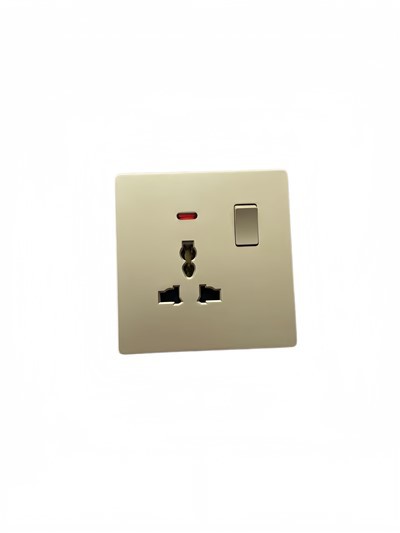
As a widely used electrical interface standard in North America, the American socket's design and functional features reflect the unique needs of local power systems. Compared to sockets in other parts of the world, American sockets exhibit significant differences in structure, voltage compatibility, and safety performance, worthy of in-depth discussion.
Based on technical specifications, American sockets are primarily divided into two categories: two-prong flat-type (120V) and three-prong grounding-type (120V/240V). The former, commonly found in common household appliances such as lamps and televisions, utilizes a flat, parallel-pin design and operates at 120V and 60Hz. The latter, used in high-power devices such as air conditioners and clothes dryers, incorporates an additional round grounding pin for safety. It's worth noting that some regions of the United States, such as Canada, may use slightly different pin spacing or current ratings (e.g., 15A versus 20A), but the core design remains the same.
In terms of materials and safety, American-style sockets generally meet UL (Underwriters Laboratories) certification standards, requiring flame-retardant outer shells and high-temperature oxidation resistance for internal copper. High-end products often incorporate child safety gates to prevent foreign objects from causing short circuits. Furthermore, some newer sockets support USB fast charging or smart on/off functions, adapting to the diverse needs of modern families.
For international travelers or those engaged in cross-border e-commerce, the compatibility of American-style sockets is particularly important. Due to differences in voltage and socket shape, using non-local electrical appliances requires a voltage converter and plug adapter, otherwise it may cause damage to the equipment or safety hazards.
Overall, the design of American-style sockets balances practicality, safety, and standardization. However, their regional characteristics also remind users to fully understand the technical specifications before using them. With the gradual harmonization of global electrical standards, American-style sockets may see further improvements in compatibility.