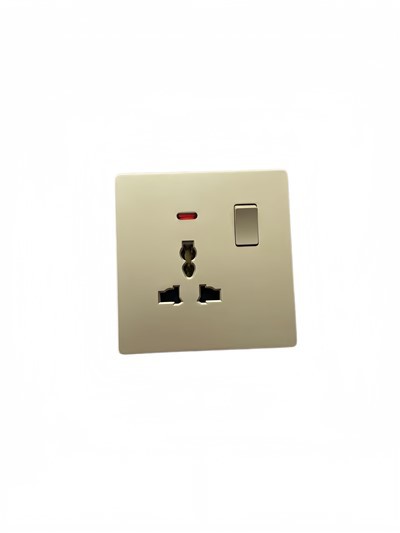
Plastic wall sockets are the most common electrical outlets in homes and offices. Their convenience is undeniable, but improper use can pose safety risks or reduce device performance. Mastering proper usage techniques ensures both electrical safety and extended socket life.
First, plug and unplug electrical appliances using proper procedures. When inserting a plug, ensure that the prongs are in full contact with the copper plate of the socket to avoid loose connections, heat generation, or even sparks. When unplugging a plug, it is recommended to grasp the plug itself rather than pulling on the wire to prevent internal breakage. If the plug is difficult to remove, avoid excessive force. Gently wiggle the plug or use a tool, but be careful not to damage the socket structure.
Second, load management is crucial. Plastic sockets are typically rated for 10A or 16A, which should be appropriately allocated based on the total power draw of the connected devices. For example, common lighting fixtures (such as desk lamps) consume less power and can be shared with mobile phone chargers. However, high-power appliances (typically over 1500W) such as electric kettles and microwave ovens should use their own sockets to avoid overloads and short circuits. If multiple outlets are needed, it is recommended to choose power strips with overload protection and ensure that their quality meets national standards.
In addition, regular inspection and maintenance are essential. Inspect the socket surface for discoloration, deformation, or burn marks. If any abnormalities are found, immediately remove the socket from service and replace it. It is recommended to turn off the main switch for sockets that are not used for long periods of time to reduce standby power consumption and potential risks. In humid environments (such as kitchens and bathrooms), sockets with splash-proof housings should be preferred to prevent moisture intrusion and leakage.
The rational use of plastic wall sockets can not only improve power efficiency but also provide a protective layer for home safety. Safety depends on details, and proper operation begins with every plugging and unplugging.