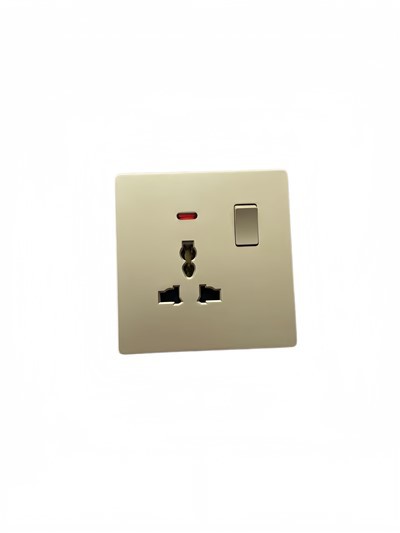
Plastic wall sockets are common electrical connectors in homes and commercial spaces. Their safety and reliability directly impact electrical safety. To ensure they comply with national standards and demonstrate acceptable performance, they undergo a rigorous testing process.
Appearance and structural inspection are the primary steps in the inspection. Inspectors must confirm that the socket housing is free of defects such as cracks, deformation, or bubbles. The plastic material should exhibit excellent flame retardancy, typically meeting UL94 V-0 standards. The socket spacing, dimensions, and markings (such as voltage and current parameters) must be clear and accurate, complying with national standards such as GB/T 2099.1.
Electrical performance testing is a key step. First, a withstand voltage test is conducted, exposing the socket to an AC voltage exceeding the rated voltage (typically 1500V to 3000V) for one minute to ensure there is no breakdown or flashover in the insulation. Next, an insulation resistance test is performed, using a megohmmeter to measure the resistance between the socket and a grounded metal component. The acceptable standard is typically no less than 5MΩ. Furthermore, the on/off functionality is tested, verifying contact reliability by inserting a standard plug to ensure smooth insertion and removal, and stable conduction.
Mechanical strength and environmental adaptability testing are equally critical. The sockets undergo impact tests (such as a free drop from a height of 1 meter) and tensile tests (plug extraction force must be between 30N and 70N) to verify structural stability. Some tests also include high-temperature and high-humidity tests (such as 48 hours in an 85°C/85% RH environment) and aging tests (simulating performance degradation after long-term use).
Finally, labeling and compliance verification ensures that product labeling is complete, including the manufacturer's name, certification marks (such as CCC), and usage warnings. Only after passing all testing items can the sockets be deemed qualified and released to the market. This rigorous process ensures the safety and durability of plastic wall sockets.